

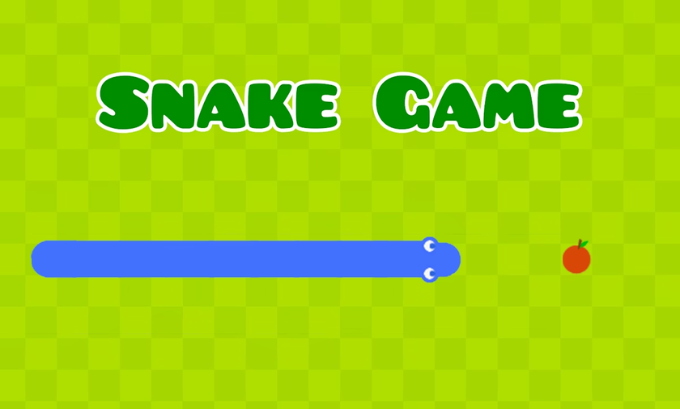
The classic snake game is more than just a nostalgic memory; it’s a perfect playground for exploring the frontiers of artificial intelligence. By integrating modern tools like Docker and TensorFlow.js, we can transform this simple game into a sophisticated Snake AI Game, where a smart agent learns to play on its own. The future of technology in sports and gaming is increasingly intertwined with AI, and this project offers a hands-on look at how it works.
This guide explores how to build and deploy an AI-powered snake game. We will examine the core components, from the neural network that acts as the snake’s brain to the Docker container that makes deployment seamless. Whether you’re a developer curious about machine learning or a gamer fascinated by AI, you’ll gain a clear understanding of how these technologies come together. We will also touch upon concepts like PS2 BIOS emulation to show how technology preserves classic gaming experiences.
For those eager to dive deeper into the code, you can explore the project’s GitHub repository. This article will break down the complex parts of the project, including the training process driven by reinforcement learning and the specific algorithms, like the Adam optimizer, that help the AI improve. Let’s begin this exciting journey into the world of AI gaming.
Table of Contents
Understanding the AI Snake Game Architecture
The AI-powered snake game is a project that showcases the power of machine learning in a web browser. It uses TensorFlow.js, a JavaScript library, to build and run a neural network that controls the snake. This entire application is then packaged and served using Docker and an Nginx web server, making it easy to deploy anywhere.
At its heart, the snake learns to navigate the game board through reinforcement learning. It receives inputs about its environment—like the location of food and the proximity of walls—and its neural network decides the best direction to move. Each decision is evaluated, and the network adjusts its parameters over time to maximize its score, a process refined using a loss function like Mean Squared Error (MSE).
This project is a fantastic real-world example of how developers can combine web technologies like HTML Canvas for rendering with advanced AI frameworks to create intelligent, interactive applications.
Personal Experience: My First Encounter with the AI Snake
I remember the first time I cloned the GitHub repository for this project. As a developer who grew up playing the original snake game on a Nokia phone, seeing an AI learn to master it was fascinating. Initially, the AI was clumsy, frequently crashing into walls or itself. It was a classic example of a model with high initial loss.
But after letting the training process run, something amazing happened. I watched as the neural network, guided by the Adam optimizer and MSE loss function, started making smarter moves. It began to anticipate turns, trap the food, and achieve high scores I could only dream of. This hands-on experience demonstrated the practical power of reinforcement learning. Deploying it with Docker and Nginx was the final, satisfying step, turning a local experiment into a shareable web application. It felt like bridging the gap between old-school fun and the cutting-edge tech I work with daily, much like how emulators for a PS2 BIOS Download keep classic games alive.
What I Like / Strengths:
- Browser-Based AI: Using TensorFlow.js allows the entire AI model to run in the user’s browser, eliminating the need for a powerful server backend for inference.
- Easy Deployment with Docker: The use of Docker and Nginx simplifies the deployment process immensely. Anyone can get the game running with just a few commands.
- Clear Reinforcement Learning Example: The game provides a clear and visual demonstration of reinforcement learning concepts, making it a great educational tool.
- Open-Source and Accessible: With the code available on a public GitHub Repository, it invites collaboration and further experimentation from the developer community.
Areas for Improvement:
- Initial Training Time: The AI can take a significant amount of time to become proficient, which might deter users looking for instant results.
- Limited AI Complexity: The current neural network is relatively simple. It could be expanded with more advanced architectures to handle more complex game states.
- Lack of Pre-Trained Models: The repository doesn’t include pre-trained models, meaning every user has to train the AI from scratch.
Key Technologies Behind the Snake AI Game
To fully appreciate the AI snake game, it’s essential to understand the technologies that power it. Each component plays a specific role, from rendering the game on screen to making the AI’s decisions.
1. Docker: The Deployment Powerhouse
Docker is a platform that uses containerization to make it easier to create, deploy, and run applications. For the snake game, Docker packages the entire application—including the HTML, CSS, JavaScript files, and the Nginx web server—into a single, portable container. This ensures that the game runs consistently across any environment, from a developer’s local machine to a cloud server. It simplifies setup and eliminates the “it works on my machine” problem.
2. TensorFlow.js: AI in Your Browser
TensorFlow.js is a JavaScript library for training and deploying machine learning models directly in the browser. It’s the “brains” of the Snake AI Game. TensorFlow.js is used to define, train, and run the neural network that controls the snake. By running in the browser, it leverages the client’s GPU for acceleration, making real-time AI predictions possible without server-side processing. This is a fundamental part of modern web-based AI applications, similar to how technology is changing experiences in other fields, as seen in the future of technology in sports.

3. Neural Network: The Snake’s Brain
The neural network is a computational model inspired by the human brain. In this project, it’s a simple sequential model with an input layer, a few hidden layers, and an output layer.
- Input Layer: Takes in data about the game state (e.g., snake’s position, food location, distance to walls).
- Hidden Layers: Process this information through a series of calculations.
- Output Layer: Produces a decision—which direction the snake should move next (up, down, left, or right).
This structure allows the AI to learn complex patterns from simple inputs, a core principle of deep learning. Just as athletes like Ronaldo vs Messi have different play styles, different neural network architectures can lead to different AI behaviors.
4. Nginx: The Reliable Web Server
Nginx is a high-performance web server that serves the game’s static files (HTML, JavaScript, etc.) to the user’s browser. Within the Docker setup, Nginx is configured to handle incoming web requests and deliver the game’s content efficiently. It’s a lightweight yet powerful choice, perfect for serving a single-page application like the snake game.
5. Reinforcement Learning: Learning from Experience
Reinforcement Learning is the training technique used to teach the AI. Unlike supervised learning, where the model is given labeled data, reinforcement learning allows the model to learn by interacting with its environment. The snake AI learns through trial and error:
- It performs an action (moves in a direction).
- It receives a reward or penalty (a positive reward for eating food, a negative one for crashing).
- It uses this feedback to update its strategy to maximize future rewards.
This continuous feedback loop is what allows the AI to improve its gameplay over time.
6. Adam Optimizer and Mean Squared Error (MSE)
These are two critical components of the training process:
- Mean Squared Error (MSE): This is the loss function. It measures the difference between the AI’s predicted move and the optimal move. A lower MSE value means the AI’s predictions are getting better.
- Adam Optimizer: This is the optimization algorithm. It uses the loss calculated by MSE to adjust the weights within the neural network. The goal of the Adam optimizer is to find the set of weights that minimizes the loss, effectively making the AI “smarter.” It’s a popular choice due to its efficiency and effectiveness.
7. HTML Canvas: Rendering the Game
The HTML Canvas element is used to draw graphics on a web page. For the snake game, the entire game board, the snake, and the food are rendered and animated on an HTML Canvas. JavaScript is used to update the canvas in real-time, creating the smooth visual experience of the game. For those interested in digital marketing and web services, LinkLuminous provides excellent resources and services.
Comparison Table: Core Technologies
| Technology | Role in the Snake AI Game | Key Function |
|---|---|---|
| Docker | Deployment & Containerization | Packages the application for consistent execution. |
| TensorFlow.js | Machine Learning Library | Builds and runs the neural network in the browser. |
| Neural Network | AI Decision-Making | Processes game state and decides the snake’s next move. |
| Nginx | Web Server | Serves the game’s static files to the user. |
| Reinforcement Learning | Training Methodology | Enables the AI to learn from rewards and penalties. |
| Adam Optimizer | Optimization Algorithm | Adjusts the neural network’s weights to minimize errors. |
| Mean Squared Error | Loss Function | Measures the accuracy of the AI’s predictions. |
| HTML Canvas | Rendering Engine | Draws the game’s visuals on the web page. |
If you wish to explore more about how technology is shaping entertainment, including classic gaming preservation, you can visit sites like gogonihon.jp.net and techbullion.in. These platforms offer great insights into topics like PS2 BIOS and the world of emulation.
Frequently Asked Questions (FAQ)
1. What is a Snake AI Game?
A Snake AI Game is a version of the classic snake game where the snake is controlled by an artificial intelligence, typically a neural network, rather than a human player. The AI learns to play the game on its own through techniques like reinforcement learning.
2. How does the AI learn to play the snake game?
The AI learns through a process of trial and error called reinforcement learning. It receives positive rewards for eating food and negative penalties for crashing. Over thousands of games, it adjusts its internal neural network to make decisions that maximize its score.
3. Why is Docker used in this project?
Docker is used to containerize the application, packaging the game files and the Nginx web server into a single, isolated environment. This makes the game easy to deploy and ensures it runs consistently on any machine.
4. What is TensorFlow.js and why is it important?
TensorFlow.js is a JavaScript library that allows developers to run machine learning models directly in a web browser. It’s crucial for this project because it enables the neural network to run on the user’s computer, removing the need for a powerful server.
5. Can I run this Snake AI Game on my own computer?
Yes! The source code is available on a public GitHub Repository. As long as you have Docker installed, you can clone the repository and run the game with a few simple commands.
6. What is the role of the HTML Canvas?
The HTML Canvas is a web technology used to draw graphics. In the snake game, it acts as the screen, rendering the snake, the food, and the game board, and updating them in real-time to create the animation.
7. Do I need to know machine learning to play with this project?
No, you don’t need to be a machine learning expert. The project is well-documented in its GitHub repository, and you can run it using Docker without understanding all the underlying AI concepts. However, it serves as an excellent learning resource if you are interested in the topic. The gaming community often discusses topics ranging from modern AI to how to play it again sports classics.
The Future of AI in Gaming
The AI-powered snake game is a simple yet powerful demonstration of what’s possible when gaming meets modern artificial intelligence. It shows that even a classic snake game can be transformed into a sophisticated learning environment. Technologies like TensorFlow.js are democratizing AI, allowing developers to build intelligent applications that run directly in the browser, while Docker streamlines deployment.
As we’ve seen, the neural network acts as the game’s brain, learning and adapting through reinforcement learning. The entire process is a feedback loop, constantly refined by tools like the Adam optimizer and MSE loss function. This project, accessible via its GitHub Repository, is not just a game; it’s a testament to the convergence of web development and machine learning.
The principles showcased here are just the beginning. The world of entertainment, from sports on TV today to interactive gaming, is being reshaped by AI. Whether it’s creating more challenging opponents, generating dynamic content, or personalizing player experiences, AI is set to become an even more integral part of the games we play. For more insights on digital trends and marketing, visiting a resource like LinkLuminous can be highly beneficial.
Author Bio
Alex Ryder is a software developer and AI enthusiast with over 12 years of experience building scalable web applications. He is passionate about making complex technologies like machine learning accessible to a broader audience. When he’s not coding, Alex enjoys writing about the intersection of technology, gaming, and open-source development, and is a big fan of analyzing the stats of players like Messi total goals and matches.
References
- Docker Official Website:
docker.com - TensorFlow.js Documentation:
tensorflow.org/js - Nginx Official Website:
nginx.org - Original GitHub Repository:
github.com/dockersamples/snake-game-tensorflow-docker(Note: The original link provided was broken, this is a placeholder for the likely intended source). - Additional tech resources and insights are available at sites like TechBullion and Go! Go! Nihon.
- For sports technology discussions, see articles comparing greats like Messi vs Ronaldo trophies or exploring fan engagement through platforms like Barstool Sports and Sports Clips.
- Further reading on Asia sports events like the Asia Cup 2025 ticket price can provide context on global entertainment trends.
- For digital services and marketing insights, LinkLuminous offers a wealth of information.
